Mallorcan Architecture: Traditional Homes and Properties for Sale
A Buyer’s Guide to Traditional Mallorcan Homes
Mallorcan architecture is one of the most distinctive and desirable features of the island’s property market.
From centuries-old stone fincas surrounded by olive groves to historic townhouses, seafront residences and contemporary Mediterranean villas, Mallorca offers an exceptional variety of architectural styles.
The island’s traditional homes were designed in response to the local climate and landscape. Thick stone walls, interior courtyards, wooden shutters, shaded terraces and high ceilings helped keep properties comfortable throughout the year.
Today, these features continue to attract international buyers looking for an authentic home in Mallorca. They are also being reinterpreted in new developments, where local stone and traditional design elements are combined with large windows, open-plan interiors and energy-efficient technology.
Whether you are searching for a restored country house, a property in a historic village or a modern villa overlooking the Mediterranean, understanding Mallorcan architecture can help you identify the style of home that best suits you.
Explore property for sale in Mallorca
The origins of Mallorcan architecture
Mallorca’s architectural identity has developed over thousands of years.
The island contains prehistoric settlements, Roman remains, Islamic water systems, medieval fortifications, Gothic churches, Renaissance mansions and Modernist buildings.
Each period introduced different construction methods, layouts and decorative influences.
The Islamic period had a particularly important influence on water management, agriculture and the use of gardens and courtyards. Channels, wells and reservoirs helped communities cultivate land in Mallorca’s dry climate.
Following the Christian conquest of 1229, Gothic architecture transformed the island’s towns and religious buildings. Palma Cathedral, known locally as La Seu, is the most famous example.
At the same time, rural homes continued to develop according to practical agricultural needs. Farmers required buildings that could protect their families, animals and harvests from summer heat, winter rain and strong winds.
This combination of monumental architecture and practical rural construction helped create the Mallorcan style recognised today.
Traditional Mallorcan fincas
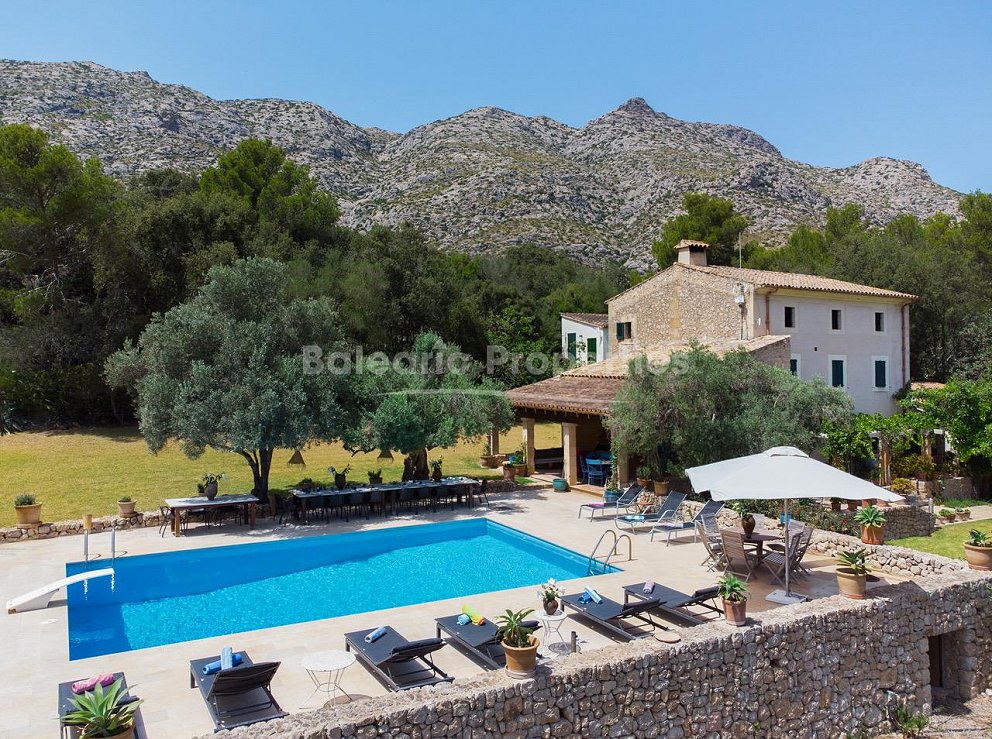
The finca is one of the most iconic forms of Mallorcan property.
The word finca generally refers to a rural property, farmhouse or country estate. Traditional fincas were working agricultural homes surrounded by farmland, olive groves, vineyards, almond trees or orchards.
Their architecture was primarily functional. Thick walls provided natural insulation, relatively small windows reduced the impact of direct sunlight and large interior spaces were used to store tools, crops and agricultural equipment.
Typical features of a traditional Mallorcan finca include:
- Natural stone façades.
- Thick exterior walls.
- Exposed wooden ceiling beams.
- Terracotta floor tiles.
- Arched entrances and internal doorways.
- Traditional wooden shutters.
- Large fireplaces.
- Interior patios and courtyards.
- Covered terraces.
- Wells, cisterns and historic water-storage systems.
Many traditional fincas have been renovated into comfortable permanent residences, second homes and luxury country properties.
The most successful renovations preserve the proportions and materials of the original building while introducing modern kitchens, bathrooms, heating, air conditioning and energy-efficient systems.
View charming country homes and fincas for sale in Mallorca
Marès stone and Mallorca’s golden façades
One of the materials most closely associated with Mallorcan architecture is marès.
Marès is a locally quarried sandstone that has been used on the island for centuries. Its colour ranges from pale cream to warm honey, creating the characteristic golden appearance seen in churches, defensive walls, village houses and country estates.
Because marès is relatively soft when first extracted, it can be shaped into arches, columns, window frames and decorative features.
However, it is also a porous material that can be affected by humidity, salt and exposure to the elements. Buyers considering an older stone property should therefore investigate the condition of the façade and confirm that any restoration work has been carried out with suitable materials.
Contemporary architects frequently use natural stone or high-quality stone cladding to connect modern villas with Mallorca’s architectural heritage.
Dry-stone walls and the rural landscape
Dry-stone construction is an essential part of Mallorca’s rural identity.
Known locally as pedra en sec, the technique consists of carefully placing stones together without mortar. Craftsmen select and position every piece so that the weight and shape of the stones produce a stable structure.
Dry-stone walls have traditionally been used to divide farmland, mark boundaries, create mountain paths and build agricultural terraces.
The Serra de Tramuntana contains some of the island’s most impressive examples. Its slopes are covered with stone terraces, retaining walls, paths and drainage systems constructed over many generations.
These structures allowed farmers to retain soil, reduce erosion and cultivate steep mountain land.
Today, traditional stone walls are also an attractive feature in residential properties. They are frequently incorporated into gardens, entrance drives, terraces and swimming-pool areas.
For buyers, well-preserved dry-stone walls can significantly enhance the character of a country property.
Discover properties for sale in North Mallorca
Traditional townhouses in Mallorca
Traditional townhouses can be found throughout Mallorca in locations such as Pollensa, Alcudia, Sóller, Artà and Palma.
From the street, their façades may appear relatively simple. Behind the entrance, however, many contain spacious rooms, stone arches, historic flooring and private courtyards.
The traditional layout often leads from the main entrance through the living areas towards a patio or garden at the back of the house. This arrangement brings natural light into the centre of the property and encourages cross-ventilation.
Traditional Mallorcan townhouses may include:
- Large wooden entrance doors.
- Natural stone arches.
- Exposed ceiling beams.
- Decorative iron balconies.
- Hydraulic floor tiles.
- Interior courtyards.
- Cellars or vaulted storage rooms.
- Upper terraces with views across the village.
Renovated townhouses are particularly attractive to buyers who want authentic architecture combined with easy access to shops, restaurants and local services.
Properties with a patio, swimming pool or roof terrace are especially sought after in historic town centres.
Explore property for sale in Pollensa
Courtyards and patios
The courtyard is a recurring feature in both urban and rural Mallorcan architecture.
In Palma’s historic centre, many grand houses and mansions contain impressive entrance patios. These spaces traditionally created a transition between the public street and the private residence.
They often include stone staircases, arches, columns, wells and large wooden doors.
In village houses, the courtyard tends to have a more domestic purpose. It provides a private outdoor area where families can dine, relax and socialise.
Citrus trees, palms, climbing plants and bougainvillea add colour and shade, while the surrounding walls provide privacy and protection from the wind.
Courtyards remain relevant in contemporary architecture because they can improve natural light and ventilation while creating an intimate outdoor living space.
View property for sale in the Palma area
Wooden shutters and climate-responsive design
Traditional Mallorcan houses are instantly recognisable by their wooden shutters.
They are commonly painted green, grey, blue or natural wood tones. Their adjustable slats allow residents to control sunlight and airflow without fully opening the windows.
During the hottest hours of the day, the shutters can be closed to prevent direct sunlight from entering the property. Air can still circulate through the slats, helping the interior remain comfortable.
Before mechanical air conditioning became widespread, architectural details such as shutters, thick walls, courtyards and shaded terraces were essential for regulating indoor temperatures.
Contemporary villas often reinterpret these features using aluminium, engineered wood and automated shading systems.
Terracotta and hydraulic floor tiles
Terracotta flooring is another defining feature of traditional Mallorcan interiors.
Its warm red and earthy tones complement natural stone, timber and limewashed walls. Terracotta also remains relatively cool underfoot during the summer months.
Older properties may contain handmade tiles with variations in texture, shape and colour. These imperfections add character and distinguish an authentic floor from a modern industrial product.
Hydraulic tiles are also frequently found in townhouses and apartments constructed during the nineteenth and early twentieth centuries.
These tiles feature geometric, floral or ornamental patterns and can create impressive entrance halls, kitchens and living rooms.
When buying a historic home, original flooring can be an important architectural asset. Buyers should establish whether it can be restored or whether damaged areas require specialist replacement tiles.
Limewashed walls and natural colours
White and pale walls are strongly associated with Mediterranean architecture.
Traditional limewash was used because it was breathable and suitable for stone construction. It allowed moisture to escape while helping protect the underlying surface.
Its light colour also reflected sunlight and reduced the amount of heat absorbed by the building.
Traditional Mallorcan interiors frequently use colours inspired by the natural landscape:
- Warm white and ivory.
- Sand and beige.
- Terracotta.
- Olive green.
- Natural oak.
- Soft Mediterranean blue.
- Charcoal and wrought-iron details.
This restrained palette produces calm, timeless interiors and allows natural materials to remain the main visual focus.
Possessions and historic estates
Mallorca’s larger rural estates are traditionally known as possessions.
Historically, these were important agricultural properties containing a principal residence, accommodation for workers, storage buildings, olive presses, mills and other facilities.
Possessions could control extensive areas of land and played a significant role in the island’s rural economy.
Architecturally, they tend to be more substantial than smaller fincas. Some contain fortified elements, watchtowers, large courtyards, chapels, guest accommodation and historic agricultural buildings.
Today, restored possessions rank among the most prestigious properties for sale in Mallorca.
They appeal to buyers seeking privacy, extensive land and historic architecture, although ownership can involve significant maintenance and restoration responsibilities.
Before buying a historic estate, purchasers should obtain specialist advice concerning planning restrictions, protected architectural elements, land use, water supply and renovation permissions.
Explore luxury country estates for sale in Mallorca
Gothic architecture in Palma
Palma contains one of the greatest concentrations of historic architecture in Mallorca.
The city’s most recognisable building is La Seu, the Gothic cathedral overlooking the Parc de la Mar. Its enormous rose window, high interior and position beside the sea make it one of Mallorca’s most important landmarks.
The nearby Royal Palace of La Almudaina reflects both Islamic and Christian influences.
Throughout Palma’s old town, buyers can also find historic mansions, palatial residences, stone townhouses and renovated apartments containing original architectural features.
Bellver Castle, positioned on a wooded hill overlooking the city, is another exceptional example. Its unusual circular design distinguishes it from most European castles of the same period.
The architecture of Palma contributes directly to the desirability of its old-town property market. Renovated apartments and townhouses with courtyards, high ceilings, original beams and historic details are especially attractive to international buyers.
Browse properties for sale in Palma de Mallorca
Modern Mediterranean villas
Contemporary Mallorcan architecture often combines minimalist design with traditional materials.
Modern villas may include floor-to-ceiling glass, large open-plan interiors and infinity pools. However, architects regularly use natural stone, timber, shutters and shaded pergolas to connect these homes with their surroundings.
The most successful contemporary properties respond to Mallorca’s landscape and climate rather than simply following an international design trend.
Common features include:
- Large windows and glazed doors.
- Open-plan kitchens and living spaces.
- Seamless transitions between indoor and outdoor areas.
- Natural stone façades.
- Covered terraces and pergolas.
- Mediterranean gardens.
- Infinity or saltwater swimming pools.
- Solar energy systems.
- Underfloor heating.
- Efficient insulation and climate control.
- Home-automation technology.
This architectural style is especially popular in coastal and elevated locations where a property has sea or mountain views.
View luxury villas for sale in Mallorca
Frontline architecture and coastal homes
Coastal architecture in Mallorca must respond to sea views, sunlight, wind and proximity to saltwater.
Traditional fishing houses were generally simple and functional, while modern frontline villas are designed to maximise views through large windows, open-plan living areas and expansive terraces.
The orientation of the property is particularly important. South-facing terraces may receive excellent winter sunlight, while covered areas and adjustable shading provide protection during summer.
Materials used near the sea must also be selected carefully because salt and humidity can affect metal, stone, paintwork and mechanical systems.
For many buyers, a frontline home represents the ultimate Mallorca property. However, the supply is limited and planning regulations can make new seafront development difficult.
This scarcity contributes to the exclusivity and long-term desirability of well-positioned coastal homes.
Discover frontline property for sale in Mallorca
Sustainable Mallorcan architecture
Many traditional Mallorcan construction methods are becoming increasingly relevant as architects seek more sustainable ways to design homes.
Thick stone walls provide thermal mass. Wooden shutters reduce solar heat gain. Courtyards encourage natural ventilation, while trees, terraces and pergolas provide shade.
These passive architectural features can reduce dependence on artificial cooling.
Modern projects may combine traditional principles with:
- Solar photovoltaic panels.
- Heat pumps.
- High-performance glazing.
- Improved insulation.
- Rainwater collection.
- Grey-water recycling.
- Efficient irrigation.
- Locally sourced materials.
- Electric vehicle charging.
Renovating an existing building can also be more sustainable than demolishing it, particularly when original materials can be preserved and reused.
Buyers should nevertheless request accurate information about energy efficiency, insulation, heating, cooling and water consumption before purchasing.
Buying a traditional property in Mallorca
Traditional properties can offer exceptional character, but buyers should examine more than their visual appearance.
A professional survey can help identify structural movement, damp, roof problems, outdated installations or unsuitable previous renovations.
Important points to investigate include:
- The legal registration of the house and any additional buildings.
- Planning permissions for extensions and renovations.
- The condition of the roof and external walls.
- Signs of humidity or water penetration.
- Electrical and plumbing installations.
- The condition of original beams.
- Water supply and wastewater systems.
- Access rights and property boundaries.
- Restrictions affecting protected buildings.
- Swimming-pool and terrace licences.
A renovated property should combine architectural authenticity with legally documented and technically sound improvements.
Independent legal and technical advice is essential before completing a purchase.
Does traditional architecture increase property value?
Authentic architectural features can increase the attractiveness and marketability of a property, particularly when they have been carefully restored.
Original stonework, courtyards, wooden beams, hydraulic tiles and mature gardens can distinguish a home from more conventional properties.
However, architectural character alone does not determine value.
Location, condition, legality, privacy, outdoor space, views, accessibility and modern facilities all influence the final price.
The most desirable homes usually combine traditional character with contemporary comfort. Buyers appreciate historic features, but they also expect reliable heating, cooling, bathrooms, kitchens, connectivity and energy efficiency.
Where to find traditional Mallorcan properties
Traditional architecture can be found throughout Mallorca, but certain areas are particularly well known for it.
Pollensa
Pollensa offers stone townhouses, renovated village homes, country fincas and substantial estates near the Serra de Tramuntana.
The old town is especially attractive to buyers looking for historic character within walking distance of restaurants, shops and cultural attractions.
See property for sale in Pollensa
Palma
Palma combines Gothic architecture, historic palaces, traditional apartments and contemporary properties.
The old town is known for its courtyards, stone staircases, high ceilings and restored mansions.
Explore property for sale in the Palma area
Alcudia and North Mallorca
Alcudia’s walled old town contains restored houses, narrow streets and historic façades. The surrounding countryside offers fincas and villas with easy access to beaches and the Bay of Alcudia.
Browse properties for sale in North Mallorca
Serra de Tramuntana
The mountain villages of Deià, Valldemossa, Sóller and Fornalutx are famous for their natural-stone architecture and dramatic landscapes.
Property supply can be limited, and planning restrictions help protect the appearance of the region.
Central Mallorca
The centre of the island offers village houses, working farms, country estates and historic properties surrounded by agricultural land.
It can appeal to buyers seeking space, authenticity and a quieter lifestyle away from the coast.
Finding the right architectural style
Mallorca offers homes for a wide range of preferences.
A traditional townhouse may suit buyers who want historic character and village life. A restored finca can provide land, privacy and a connection with the countryside.
A contemporary villa may be preferable for buyers seeking energy efficiency, modern technology and open-plan living. A frontline property can offer direct access to the sea and uninterrupted views.
Before choosing, consider how the home will be used.
A permanent residence may require year-round heating, practical storage and convenient access to schools and services. A second home may place greater emphasis on outdoor living, swimming pools, low maintenance and accessibility from the airport.
An investment property will require additional consideration of location, local demand and any licences associated with rental activity.
View properties with a holiday rental licence
Find your Mallorcan property
Mallorcan architecture has lasting appeal because it reflects the island’s landscape, history and climate.
Its materials were locally sourced, its courtyards and shutters responded to the Mediterranean sun, and its terraces were designed around outdoor living.
Even the most contemporary villas continue to draw inspiration from these traditions.
For buyers, choosing a property in Mallorca is therefore not only a financial or lifestyle decision. It is also an opportunity to own a home connected with a distinctive architectural heritage.
Whether you prefer a stone finca, historic townhouse, luxury estate, modern villa or frontline residence, Mallorca offers an exceptional selection of properties.
Search all property for sale in Mallorca
Frequently asked questions about Mallorcan architecture
What characterises traditional Mallorcan architecture?
Traditional Mallorcan architecture is characterised by local stone, thick walls, wooden shutters, exposed beams, terracotta floors, courtyards and shaded terraces.
These features were developed in response to Mallorca’s climate and locally available construction materials.
What is a Mallorcan finca?
A Mallorcan finca is a rural property, farmhouse or country estate.
Traditional fincas were originally connected with agriculture and often include natural-stone façades, wooden beams, fireplaces, courtyards and surrounding land.
What is marès stone?
Marès is a type of sandstone traditionally quarried in Mallorca.
Its warm cream and honey colours can be seen in churches, townhouses, country properties and historic defensive buildings.
Why do Mallorcan houses have shutters?
Shutters help control direct sunlight, ventilation and privacy.
They can reduce heat entering the house during summer while allowing air to circulate through their adjustable slats.
Are traditional properties more expensive?
Traditional architectural features may increase a property’s desirability, but price also depends on location, condition, legality, land, views, outdoor space and modern facilities.
Can a traditional Mallorcan house be modernised?
Yes. Many fincas and townhouses have been renovated with contemporary kitchens, bathrooms, heating, cooling and energy-efficient systems.
The most successful projects preserve original features while introducing modern comfort.
Is it safe to buy an old house in Mallorca?
It can be, provided that the property is inspected carefully and its legal status is verified.
Buyers should obtain independent legal advice and commission a professional building survey before completing the purchase.
Where can I find traditional properties for sale in Mallorca?
Pollensa, Alcudia, Palma, Sóller, Deià, Valldemossa, Artà and central Mallorca are among the most popular areas for traditional houses, fincas and historic properties.