How to Sell Mallorca Property with Profit

How to Sell a Mallorca Property Profitably
Selling a property in Mallorca profitably involves much more than achieving a sale price above the amount originally paid.
A successful property exit should take into account the acquisition costs, improvements made during ownership, annual maintenance expenses, professional fees and taxation. Only after all these amounts have been deducted can an owner understand the true return generated by the investment.
Mallorca remains highly attractive to international buyers searching for villas, apartments, traditional fincas, townhouses and seafront homes. However, strong demand does not mean that every property will sell quickly or achieve its maximum potential value.
The owners who obtain the strongest results normally prepare their sale well in advance. They establish a realistic market value, organise the legal documentation, understand their tax position and ensure that the property is presented professionally to the right audience.
This guide explains how to prepare, market and sell a Mallorca property while protecting as much of your return as possible.
Explore property for sale in Mallorca
What does selling a Mallorca property profitably really mean?
A profitable sale should not be measured simply by subtracting the original purchase price from the final selling price.
The actual return depends on the total amount invested throughout the ownership period. This can include purchase taxes, legal and notary costs, financing expenses, renovation work, maintenance, insurance, community fees and property management.
The cost of selling must also be taken into account. Estate agency fees, legal representation, mortgage cancellation costs and taxation can all reduce the final amount retained by the seller.
For example, a property purchased for €800,000 and later sold for €1,000,000 has not necessarily generated a net profit of €200,000. The real result can be considerably lower once the acquisition, ownership and selling costs are included.
For this reason, owners should prepare a detailed net-proceeds calculation before deciding on an asking price.
Calculate your net proceeds before placing the property on the market
Many sellers focus on the headline value of an offer without calculating how much they will actually receive after completion.
Before the property is listed, request an estimate of the principal costs associated with the transaction. These may include estate agency commission and VAT, independent legal representation, mortgage cancellation expenses, energy certification, municipal taxes and capital gains tax.
Outstanding community fees, local property taxes or unresolved legal issues may also need to be settled before completion.
Owners who are not resident in Spain should pay particular attention to the mandatory withholding applied to the sale. When a Spanish property owned by a non-resident is sold, the buyer generally retains 3% of the agreed purchase price and pays it directly to the Spanish tax authority.
This withholding is a payment on account rather than necessarily the seller’s final tax liability. Where the final amount owed is lower, the seller may be entitled to request a refund. Where it is higher, the remaining balance must be paid.
The exact tax result depends on the individual circumstances of the seller, so personalised advice from an independent Spanish tax professional is essential.
Read our guide to property taxes in Mallorca
Understand capital gains tax before you sell
Capital gains tax is generally calculated on the taxable difference between the property’s acquisition value and its transfer value, following the applicable Spanish tax rules.
The calculation may take into account certain documented costs associated with the original purchase and the eventual sale. Qualifying improvement expenditure may also affect the taxable gain, provided that the owner can supply valid invoices and evidence of payment.
Routine repairs and maintenance are not always treated in the same way as structural improvements. Sellers should therefore avoid assuming that every amount spent on the house can automatically be deducted.
Good record-keeping can make a significant difference. Owners should retain the original purchase deed, tax receipts, notary and Land Registry invoices, legal fees, architect invoices, building licences and contractor documentation.
Evidence of payment is also important. A tax adviser will need this information to determine which costs can legitimately be included in the calculation.
The final tax treatment may differ depending on whether the seller is resident or non-resident, whether the property is owned personally or through a company and whether any exemption or relief is available.
Tax planning should begin well before the property is placed on the market, not after a buyer has already been found.
Allow for the municipal Plusvalía tax
Sellers may also be liable for the municipal tax commonly known as Plusvalía Municipal.
This tax relates to the increase in the value of the urban land during the ownership period. It is managed by the local town hall and is separate from capital gains tax.
The amount can vary according to the cadastral value of the land, the number of years the property has been owned, the municipality and the method of calculation applicable to the transaction.
A lawyer or tax adviser can normally request an estimate from the relevant town hall before the sale. This allows the seller to include the amount in the overall net-proceeds calculation rather than discovering it shortly before completion.
Choose the right moment to sell
There is no single perfect month or season for selling every property in Mallorca.
The correct moment depends on the owner’s financial objectives, the condition of the property, the strength of the local micro-market and the level of demand for that particular type of home.
Mallorca is not one uniform property market. A townhouse in Pollensa may perform differently from an apartment in Palma, a country finca in the centre of the island or a contemporary villa in Puerto Andratx.
Owners should review the current value of the property, recent comparable transactions, the number of competing homes and the likely buyer profile.
The performance of the investment should also be considered. Rental income, maintenance costs, mortgage expenses and upcoming renovation requirements can influence whether continuing to hold the property remains worthwhile.
Waiting indefinitely for the highest possible price can be counterproductive. Any additional appreciation may be reduced by another year of maintenance, financing, taxation and opportunity costs.
A forced sale is equally undesirable because financial pressure can weaken the seller’s negotiating position.
The best approach is to define a minimum acceptable net amount and a realistic timetable before marketing begins.
Obtain a realistic property valuation
An accurate valuation is one of the most important elements of a successful sale.
The original purchase price does not automatically determine the current value. Neither does the amount spent on renovations or the price being requested by a neighbouring owner.
A professional valuation should consider the exact location, condition, legal status and size of the property. Views, orientation, privacy, accessibility, parking and outdoor spaces can also have a significant influence.
The quality of any renovation is particularly important. Buyers may pay a premium for a carefully modernised home, but poorly executed or undocumented work can reduce confidence and create legal concerns.
The valuation should be supported by current competing listings and, where possible, evidence from recent sales in the same area.
Overpricing often damages the eventual result. A property that remains unsold for an extended period can begin to appear unattractive, even when the main problem is simply the asking price.
Buyers may assume that there is a hidden defect or that the owner is not genuinely motivated to sell.
A carefully supported initial price usually generates more qualified enquiries and places the seller in a stronger negotiating position.
Browse current properties for sale in Mallorca
Prepare the legal documentation before marketing
A buyer will normally instruct a lawyer to investigate the legal and planning status of the property.
Preparing the relevant documentation in advance can prevent delays, reduce uncertainty and minimise the risk of a transaction failing after an offer has been accepted.
The seller should normally gather:
- The title deed and an updated Land Registry extract.
- Cadastral information and recent IBI receipts.
- Community certificates and fee records, where applicable.
- The energy performance certificate.
- Planning licences and architect certificates for renovations or extensions.
- Documentation relating to swimming pools, guest accommodation or additional buildings.
- Rental licence documentation, where relevant.
- Utility bills and mortgage cancellation information.
Any differences between the physical property, the Land Registry and the Cadastre should be investigated before marketing begins.
Unregistered extensions, terraces, pools or guest accommodation can affect the valuation, mortgage approval and the buyer’s willingness to proceed.
Resolving these matters early gives the seller more control. Discovering them during the final stages of legal due diligence can result in delays, renegotiation or the loss of the buyer.
Learn why independent legal advice matters
Improve the property without over-renovating
Not every property requires a major renovation before being sold.
In many cases, targeted maintenance and professional presentation will produce a better return than an expensive speculative refurbishment.
Visible defects should be addressed before photography and viewings begin. Damaged shutters, marked walls, broken exterior lighting, neglected gardens and poorly maintained pools can create a negative impression that extends beyond the actual cost of repair.
Heating and air-conditioning systems should be serviced, while plumbing and electrical issues should be investigated. Terraces, façades and natural-stone surfaces should be cleaned and presented in good condition.
The property should also be decluttered and depersonalised. Buyers need to understand the proportions of each room and imagine how they might use the house themselves.
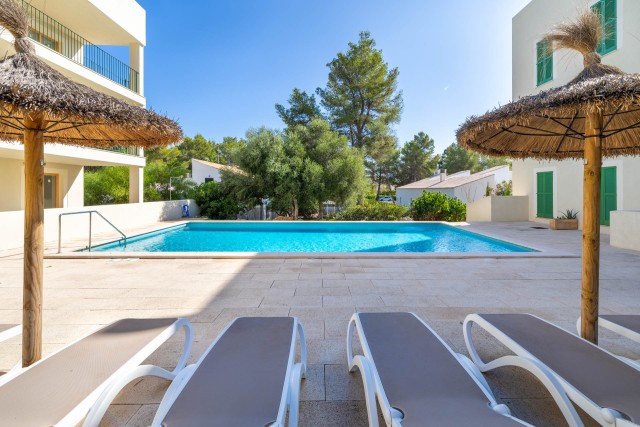
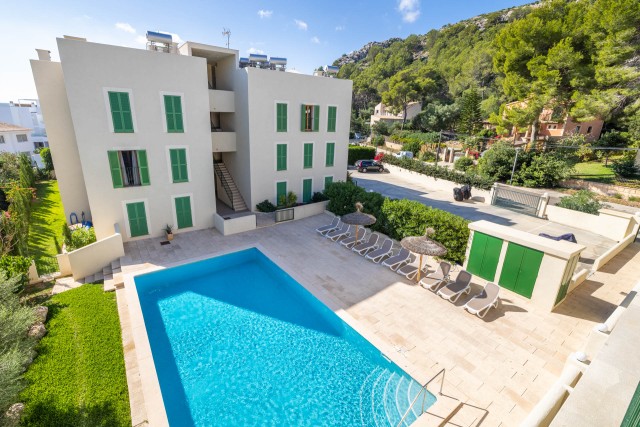
Outdoor living is especially important in Mallorca. Shaded terraces, dining areas, gardens, swimming pools and views often influence the purchasing decision as much as the interior.
A clean and inviting exterior can therefore make a considerable difference to both the emotional appeal and the perceived value of the home.
Use professional photography and international marketing
Most international buyers begin their search online, often long before travelling to Mallorca.
The photographs, video, floor plan and written description will normally create the buyer’s first impression of the property.
Professional photography is therefore not an optional extra. Poor images can prevent a suitable buyer from arranging a viewing, regardless of the quality of the home.
The description should explain the strongest features clearly and accurately. It should describe the location, orientation, views, outdoor areas and condition without exaggeration or vague language.
Accurate floor plans are also valuable, particularly for international buyers who may be comparing several properties remotely.
Drone photography and video can help explain the relationship between the house, its land and the surrounding area, provided that they are used legally and add genuine value.
The marketing campaign should be adapted to the most likely buyer. A traditional townhouse in Pollensa requires a different strategy from a large country estate or a modern seafront villa.
International property portals, multilingual campaigns, social media, direct buyer databases and established agency networks can all play a role.
The objective is not simply to generate the highest number of enquiries. It is to reach serious buyers whose expectations, budget and timetable match the property.
Discover luxury villas for sale in Mallorca
Decide between open-market and discreet marketing
Some owners prefer to sell their property discreetly, without broad public advertising.
This approach can be suitable for high-profile owners, exceptional properties or sellers who place a particularly high value on privacy.
However, discreet marketing also reduces exposure. The success of an off-market sale depends heavily on the agency’s existing database, professional network and ability to identify suitable buyers directly.
Open-market promotion generally reaches a wider audience and can create more competition between interested parties.
The decision should be based on the type of property, the seller’s privacy requirements and the desired completion timetable.
In some cases, a staged strategy may be appropriate. The property can first be introduced discreetly to qualified buyers before moving to a wider campaign if no suitable offer is received.
Consider the effect of existing holiday rentals
Owners of investment properties may wish to continue generating rental income while the property is being marketed.
This can be beneficial, but it can also complicate the sales process.
Existing bookings may limit the dates available for photography and viewings. Guests may not be comfortable with visits during their stay, while some buyers will require vacant possession at completion.
The seller should review all confirmed bookings, cancellation conditions and management agreements before listing the property.
Where a valid tourist rental licence exists, it may add value for certain investment buyers. However, the legal status of the licence, the rental history and any management arrangements should be verified carefully.
The sales contract should clearly state what will happen to future bookings and whether any income or obligations will transfer to the buyer.
View properties with holiday rental licences
Negotiate the complete transaction, not only the price
The highest offer is not always the strongest offer.
A seller should consider the buyer’s financial position, whether mortgage approval is required, the size of the deposit and the proposed completion timetable.
Conditions attached to the offer can also affect its real value. A buyer may request furniture, repairs, legal regularisation or a long period before completion.
A slightly lower cash offer with a substantial deposit and a short, secure timetable may produce a better result than a higher conditional offer that takes several months to complete.
The cost of holding the property during any delay should also be included in the comparison.
Negotiation should therefore focus on the likely net outcome and the probability of completion rather than only the headline figure.
An experienced estate agent can help establish the strength of the buyer’s position and identify potential risks before the offer is accepted.
Avoid the most common selling mistakes
One of the most frequent mistakes is setting the asking price according to personal expectations rather than current market evidence.
The amount the owner originally paid, the value of emotional improvements and the sum needed for a future purchase do not determine what a buyer will pay.
Another common problem is beginning the marketing process before the documentation is ready. Legal inconsistencies can lead to delays, lower offers and unsuccessful transactions.
Owners can also underestimate taxation and selling costs. A strong headline price may still produce a disappointing result when the final net proceeds are calculated.
Weak photography and generic descriptions can prevent the property from standing out online, while refusing reasonable offers without considering future holding costs may also reduce the eventual return.
The most damaging mistake is waiting until a sale becomes urgent. Sellers who need immediate liquidity normally have less flexibility and a weaker negotiating position.
Plan the exit several months in advance
A well-managed sale should normally begin with legal, tax and financial preparation.
Six to twelve months before the intended sale, the owner should review the property’s financial performance, gather purchase and renovation invoices and obtain preliminary legal and tax advice.
This is also the right moment to request an initial valuation and identify any planning or registration issues.
During the following months, documentation can be corrected, essential maintenance completed and the property prepared for photography.
The owner and agency should then agree on the marketing strategy, asking price and minimum acceptable net result.
Once the property is listed, enquiry levels, viewing feedback and competing properties should be monitored carefully.
After an offer has been accepted, the seller’s lawyer can coordinate the deposit contract, due diligence responses, mortgage cancellation and completion arrangements.
Planning these stages in advance reduces pressure and allows the seller to make decisions based on evidence rather than urgency.
Read our complete guide to property taxes in Mallorca
How Mallorca Property can help you sell
Selling a Mallorca property successfully requires local knowledge, realistic pricing and access to qualified international buyers.
Mallorca Property combines experience across the island with multilingual and international marketing.
Our team can assist with property valuation, pricing strategy, professional presentation, buyer qualification, viewings and negotiation.
We can also coordinate with the seller’s independent lawyer, tax adviser, architect and other professionals throughout the transaction.
Every property requires a tailored approach. A traditional finca, a Palma apartment, a family townhouse and a frontline villa will attract different buyers and should not be marketed in the same way.
The objective is to position the property correctly, reach the most suitable audience and support the transaction through to completion.
Key points to remember
- Calculate the likely net proceeds before agreeing on an asking price.
- Obtain independent legal and tax advice before the marketing process begins.
- Resolve registration and planning issues as early as possible.
- Use a valuation based on current local evidence rather than personal expectations.
- Present the property professionally and market it to the correct international audience.
- Evaluate offers according to their complete terms and probability of completion.
Frequently asked questions about selling property in Mallorca
What costs should I expect when selling a property in Mallorca?
Selling costs may include estate agency commission, legal fees, mortgage cancellation expenses, certificates, municipal Plusvalía and capital gains tax.
The final amount depends on the property, the seller’s tax residence and the structure of the transaction.
What is the 3% withholding for non-resident sellers?
When a non-resident sells a Spanish property, the buyer generally retains 3% of the agreed sale price and pays it to the Spanish tax authority.
This is a payment on account of the seller’s final tax liability rather than necessarily the final tax due.
What capital gains tax applies to a non-resident seller?
Capital gains arising from the sale of Spanish property by a non-resident are generally taxed under Spanish non-resident income tax rules.
At the time of publication, the commonly applicable rate is 19%, but the seller should confirm the current position and the correct calculation with an independent tax adviser.
Can renovation costs reduce the taxable gain?
Certain documented improvement costs may be considered when calculating the taxable gain.
Routine repairs and maintenance may be treated differently, so valid invoices, proof of payment and professional tax advice are important.
When should I start preparing to sell?
Ideally, preparation should begin six to twelve months before the intended sale.
This allows sufficient time to review the tax position, organise documentation, resolve legal issues and prepare the property for marketing.
Is spring or summer the best time to sell?
Seasonality can influence the number of viewings, but the best moment depends on the property and its likely buyer.
Mallorca attracts international purchasers throughout the year, especially for correctly priced homes in desirable locations.
Should I renovate before selling?
A major renovation is not always necessary.
Targeted repairs, maintenance, painting, decluttering and improvements to gardens and terraces can often provide a better return than a large speculative refurbishment.
How is a Mallorca property valued?
The valuation depends on location, condition, legal status, size, views, outdoor space, privacy, accessibility and recent comparable market evidence.
Each area and property type should be assessed separately.
Can I sell a property with existing holiday bookings?
Yes, but the bookings, rental licence and management arrangements must be reviewed carefully.
The sale contract should clarify whether future reservations will be completed, cancelled or transferred.
Why use an estate agent with international reach?
A significant proportion of Mallorca’s buyers come from outside Spain.
Multilingual marketing, international distribution and access to an established database of overseas purchasers can increase exposure to suitable buyers.
Important information
This article is intended to provide general information and does not constitute legal, tax or financial advice.
Spanish property and tax rules may change, and their application depends on the seller’s individual circumstances.
Owners should always obtain independent advice from a qualified Spanish lawyer and tax professional before selling a property in Mallorca.