Why You Need a Surveyor When Buying Property in Mallorca
Buying in Spain · Updated 2026
Why You Need a Surveyor When Buying Property in Mallorca
The Due Diligence Step Most Foreign Buyers Skip
Most foreign buyers purchasing property in Mallorca instruct a lawyer — but very few commission an independent surveyor. That gap in due diligence costs buyers thousands every year. A building survey in Spain is not legally required, but on a resale property it is one of the most valuable investments you can make before exchanging contracts.
Most buyers focus on legal checks, taxes, contracts, and the notary process. These are essential, but they only cover part of the risk. Your lawyer checks the legal status of the property. A surveyor checks the physical condition of the building.
In Spain, the notary process and your property lawyer handle legal and title due diligence. A surveyor handles the physical condition of the building. Both are essential. Your lawyer cannot assess structural cracks, damp, roof problems, defective electrics, or illegal extensions hidden behind fresh paint. Only a qualified surveyor can.
What Does a Surveyor Do in Spain?
A surveyor — known in Spain as an arquitecto técnico or perito — carries out a physical inspection of the property you intend to buy. Their role is to identify defects, structural problems, maintenance issues, and risks that are not visible in photos or during a viewing.
Unlike in the UK, Spain has no mandatory seller’s survey or condition report, so the buyer carries almost all the risk of undisclosed defects.
A comprehensive survey in Mallorca typically covers:
- Structural integrity, including foundations, load-bearing walls, roof structure and covering
- Damp and water ingress, including rising damp, roof leaks and condensation damage
- Electrical installation and compliance with current Spanish regulations
- Plumbing condition, pipework age, water pressure and drainage
- Windows, doors and thermal insulation
- Signs of illegal extensions or alterations that may conflict with the building licence
- Swimming pool and outbuilding condition
- Overall assessment of repair and maintenance costs
Risks of Buying Without a Survey
Spain’s resale market includes properties spanning decades of construction — from 1970s coastal apartments built during the boom years to rural fincas of uncertain age. Many have been cosmetically renovated for sale without addressing underlying problems.
Without a survey, you are relying almost entirely on what the seller discloses and what you can see during a viewing.
Hidden Structural Problems
Cracks in walls, subsidence, and failing foundations are often concealed with fresh render or paint. Structural repairs in Spain can be expensive and typically cannot be identified without a professional inspection.
Roof and Waterproofing Failures
Flat roofs are common across Spain’s Mediterranean coast and are prone to waterproofing failure. A leaking roof identified before purchase is a negotiating tool. Discovered after completion, it becomes your problem entirely.
Electrical Wiring Not Up to Code
Older properties often have outdated or dangerous wiring that may fail to meet Spain’s current electrical standards. Re-wiring a villa or apartment can become a significant additional cost and may be required before obtaining home insurance.
Illegal Extensions and Encroachments
An extension built without planning permission may not appear in the building licence and can create problems with mortgages, insurance, future resale, or legal compliance.
Your lawyer checks licences on paper. A surveyor spots the physical discrepancies.
Damp and Mould Concealed by Renovation
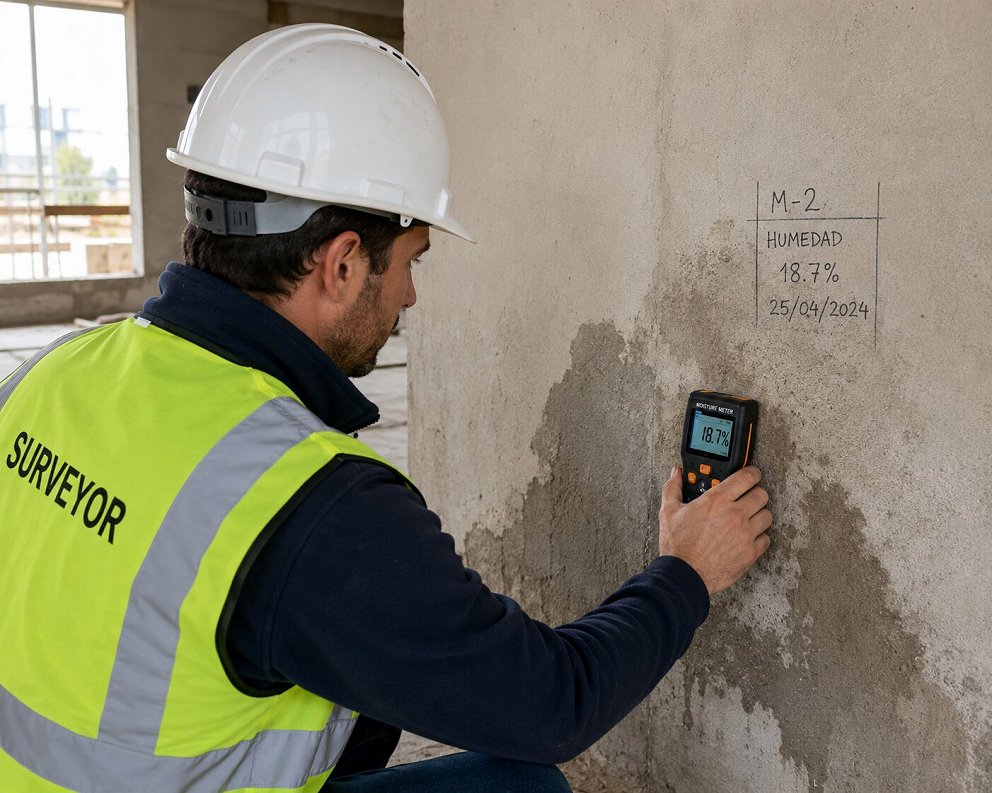
Sellers may repaint damp-affected areas before listing a property. A surveyor can use moisture meters and specialist knowledge to detect damp behind finished surfaces and identify the true extent of the problem.
Limited Recourse After Completion
Spain offers limited protection once a sale completes. The burden is largely on the buyer to investigate the property before signing. A survey is one of your strongest forms of protection.
Types of Survey Available in Spain
There is no single standardised survey format in Spain equivalent to the UK’s RICS reports, but most qualified surveyors offer services across different levels of detail.
Basic Visual Inspection
A basic visual inspection usually covers visible defects, general condition, and obvious structural concerns. It may be suitable for new-build or recently refurbished apartments where the risk is lower.
Full Building Survey
A full building survey is more detailed and normally covers structure, damp, electrics, plumbing, roofing, extensions, swimming pools, outbuildings, and a written report. It is strongly recommended for resale villas, older apartments, rural properties, fincas, and homes with previous renovations.
Valuation and Survey
A valuation plus survey includes the physical inspection together with an independent market valuation. This can be useful for buyers seeking mortgage reassurance or concerned about overpaying.
For any resale property over €200,000, a full building survey is strongly recommended. The cost is usually small compared with the purchase price and can save a multiple of that figure in negotiation or avoided repairs.
When to Commission a Survey
Timing is important. In Spain, the buying process often moves quickly from reservation to arras contract to completion, sometimes within 6 to 10 weeks.
You should commission a survey as early as possible — ideally before signing the Contrato de Arras, since that contract usually commits you to the purchase with a deposit at risk.
Step 1: Offer Accepted
The seller accepts your offer verbally or through the agent. No final legal commitment exists yet. This is the right moment to instruct both your lawyer and your surveyor.
Step 2: Survey Commissioned
Your surveyor visits the property, often within a few days depending on availability. The inspection should run alongside your lawyer’s legal due diligence checks.
Step 3: Report Received and Reviewed
Review the survey report with your lawyer. If defects are identified, you may be able to renegotiate the price, ask the seller to repair the issues before completion, or withdraw from the purchase before becoming legally committed.
Step 4: Arras Contract Signed
Only once you are satisfied with both the legal due diligence and the survey findings should you sign the Contrato de Arras and pay the deposit.
Step 5: Pre-Completion Walk-Through
If repairs were agreed as a condition of sale, ask your surveyor to revisit before the notary signing to confirm that the works have been completed to an acceptable standard.
Step 6: Completion at Notary
With legal and physical due diligence complete, you can sign the escritura with greater confidence. Your lawyer handles registration and taxes. Your surveyor’s role is complete.
What a Survey Costs in Mallorca
Survey fees in Spain vary by property type, size, location, and complexity. As a general guide, buyers should expect to pay several hundred euros for a professional building survey on a standard apartment or villa.
Rural properties, large fincas, historic homes, and complex buildings typically cost more because they require a more detailed inspection.
Importantly, a survey report with identified defects can often justify a price reduction that is much greater than the survey fee. A written professional report carries far more weight than a buyer’s verbal concern.
How a Surveyor and Your Lawyer Work Together
A surveyor and a property lawyer perform complementary but distinct roles. Understanding the boundary between them helps you get the most from both professionals.
Your property lawyer investigates the legal status of the property: title, charges, planning licences, community debts, tax compliance, and contract terms. They confirm what you are legally buying and protect your interests at every contractual stage.
Your surveyor investigates the physical condition of the property: structure, services, fabric, and hidden defects. They tell you what you are physically buying and flag problems the seller has not disclosed.
Where the two roles converge is on illegal construction. If a surveyor identifies an extension that does not match the approved building plans, your lawyer can then verify whether it has been legalised or whether it carries ongoing legal risk.
This joined-up approach between both professionals gives you the most complete picture before you commit.
How to Find a Qualified Surveyor in Mallorca
Look for a surveyor who is a qualified arquitecto técnico, registered with their regional Colegio Oficial de Aparejadores y Arquitectos Técnicos, or an ingeniero de edificación.
Many English-speaking surveyors operate in popular buyer areas including the Costa del Sol, Costa Blanca, Balearic Islands, and Barcelona.
When choosing a surveyor:
- Ask your property lawyer for a recommendation
- Ensure the surveyor holds professional indemnity insurance
- Request a sample report before commissioning
- Confirm the report can be delivered in English if required
- Avoid surveyors recommended only by the estate agent selling the property
- Check that the fee is fixed and not commission-based on the sale proceeding
Frequently Asked Questions
Is a survey legally required when buying property in Mallorca?
No. Spain has no legal requirement for a buyer or seller to commission a building survey. This makes it optional, but it also means the legal system provides limited protection if you discover defects after completion.
What is the difference between a surveyor and a property lawyer in Spain?
A property lawyer handles legal due diligence, including title, charges, planning licences, contracts, taxes, and Land Registry registration. A surveyor handles physical due diligence, including structure, damp, services, roofing, and hidden building defects. You need both for complete protection.
Can I use a survey report to renegotiate the price?
Yes. This is one of the most practical reasons to commission a survey. A written professional report identifying specific defects gives you a strong basis to request a price reduction or ask the seller to complete repairs before completion.
Do I need a survey on a new-build property in Mallorca?
For a brand-new property from a reputable developer, a full structural survey may be less critical, but a snagging inspection is still highly recommended. New-build buyers should also make sure their lawyer checks licences, guarantees, bank guarantees, and contract terms.
How long does a survey take in Spain?
The physical inspection of a standard apartment or villa normally takes a few hours. The written report is usually delivered within several working days, depending on the surveyor and the complexity of the property.
What if the survey reveals serious problems after I have signed the arras?
This is why surveying before signing the arras contract is strongly recommended. Once you have signed a Contrato de Arras and paid the deposit, withdrawing may mean losing that deposit. If serious defects are found afterwards, your options become much more limited.
Should I get a survey for an apartment in Spain?
Yes, especially if the apartment is older, located in a coastal area, has been renovated, or forms part of a building with shared structural elements. A survey can identify damp, façade issues, roof problems, community maintenance concerns, and outdated installations.
Should I get a survey for a finca or rural property in Mallorca?
Yes. Rural properties and fincas often carry higher physical and planning risks. A surveyor can identify structural problems, damp, roof issues, outbuildings, swimming pools, access problems, and possible discrepancies between the built reality and the legal paperwork.
Final Advice Before Buying Property in Mallorca
A survey is not a legal requirement in Spain, but it is one of the most important safeguards available to foreign buyers. It helps you understand the true condition of the property, avoid hidden repair costs, and negotiate from a stronger position.
When buying property in Spain, the safest approach is to instruct both an independent property lawyer and an independent surveyor before signing anything or paying a significant deposit.
Disclaimer: This article is provided for general information purposes only and does not constitute legal advice. Property law and building regulations in Spain vary by region and change over time. Always consult a qualified independent property lawyer and a registered surveyor before making any property purchase decisions.