
Buying Frontline Property in Mallorca: The Coastal Law Explained
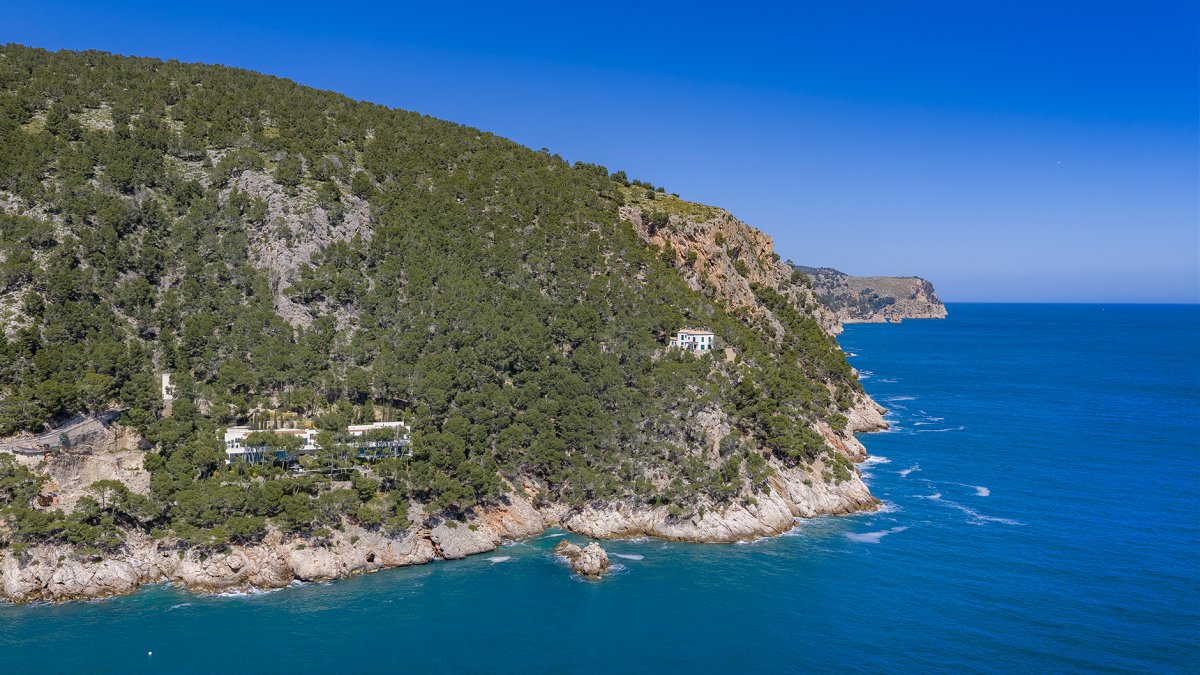
Spain's Coastal Law decides what you can build, extend or renovate near the sea. Here is what frontline buyers in Mallorca should check before they sign.
In short: any home on Mallorca's seafront is governed by Spain's Coastal Law (Ley 22/1988 de Costas, reformed by Ley 2/2013). Land closest to the sea is public, a 6-metre strip must stay free for walkers, and within a protection zone of 100 metres (20 metres in areas that were already urban in 1988) existing buildings can be repaired and modernised but not enlarged. Before buying frontline, check where the official boundary line runs and what the Land Registry says.
Frontline villas and apartments are among the most sought-after homes on the island, and they rarely come to market. They also carry rules that do not apply a few streets back. This guide explains, in plain English, how the Coastal Law affects a purchase. It is general information, not legal advice: always have an independent Spanish lawyer review the specific property.
What does "frontline" mean in legal terms?
Estate agents use "frontline" for homes with nothing between them and the sea. The law looks at it differently. It divides the coast into public land and a series of strips, measured inland from the inner edge of the shore, each with its own restrictions.
Public coastal land (DPMT)
The dominio público marítimo-terrestre (DPMT) belongs to the State under Article 132.2 of the Spanish Constitution. It covers the shore between the low-water line and the furthest point reached by waves in the largest known storms, plus beaches and dunes. It cannot be privately owned. Its limit is fixed by an administrative procedure called the deslinde, which draws the official line between public and private land (MITECO, Coastal Law FAQ).
The strips behind the public land
According to the Ministry for the Ecological Transition (MITECO):
Right of way (servidumbre de tránsito): 6 metres, extendable to 20 metres where passage is difficult or dangerous. It must be kept clear for pedestrians, and nothing may be built there.
Protection zone (servidumbre de protección): 100 metres as a general rule, extendable to 200 metres. It is reduced to 20 metres for land that was already classed as urban on 28 July 1988, or that had an approved partial plan before 1 January 1988 (MITECO FAQ).
Sea access (servidumbre de acceso al mar): land needed for public access to the shore. In urban areas, vehicle access points should be no more than 500 metres apart and pedestrian access points no more than 200 metres apart.
Zone of influence: at least 500 metres inland, where planning must avoid dense walls of building along the coast.
Where a coastal town was already urban land in 1988, the reduced 20-metre zone can apply; undeveloped stretches generally carry the full 100 metres. The figure for any particular plot depends on its planning history, which is why it has to be checked case by case.
What can you do with a home in the protection zone?
This is the question that matters most to buyers who plan to renovate.
New homes are not allowed. The MITECO FAQ states that new buildings, homes or hotels of any kind are prohibited in the protection zone, and that the volume, height and floor area of existing buildings cannot be increased.
Existing, lawfully built homes can be maintained and improved. Since the 2013 reform, repair, improvement, consolidation and modernisation works are permitted provided they do not increase volume, height or floor area. They must also improve energy efficiency and save water (Ley 2/2013, BOE 30 May 2013).
Paperwork is lighter than it used to be. For these works on existing buildings, a sworn statement (declaración responsable) to the regional authority replaces the previous authorisation, according to the preamble of Ley 2/2013. A town hall licence is still required.
In practice, this means a frontline home is usually bought for what it already is. A tired villa can become a beautiful, efficient modern home, but an extra storey or a large extension is generally off the table. Ask your architect to confirm what is possible before you agree a price that assumes an extension.
Who manages the coast in Mallorca?
The Coastal Law is national, but day-to-day management of the Balearic coastline was transferred to the regional government by Royal Decree 994/2022. The Balearic Government's Directorate-General for Coasts and Coastline now handles most authorisations and enquiries on the islands, while the State keeps responsibility for defining the public boundary.
Homes that fell inside public land: concessions
When the 1988 law came in, some homes ended up on the public side of the new boundary. Their owners did not simply lose them. The law turned their rights into a concession: a right to keep occupying and using the property for a set period.
Ley 2/2013 raised the maximum term of coastal concessions to 75 years and allowed an extraordinary extension of existing ones, also up to 75 years.
Concessions can be passed on by inheritance and by sale. A sale needs prior authorisation from the Administration, and heirs have four years to notify the transfer.
A concession can be revoked if the buildings are at real risk of being reached by the sea.
Buying a property held under a concession is very different from buying freehold. The price, mortgage options and resale value all reflect the remaining term. If a listing mentions a concession, ask for the concession document and its expiry date before going further.
Due diligence checklist for frontline buyers
Locate the boundary line. Ask your lawyer to confirm whether a deslinde has been approved for that stretch of coast and where the public land, right of way and protection zone fall on the plot.
Read the Land Registry entry. Since 2013, public coastal land must be registered, and when a boundary procedure (deslinde) begins, registrars add a marginal note to properties that may be affected by it, including land that could fall within the protection zone. The MITECO FAQ also notes that coastal transfers need an administrative certificate confirming the property does not invade public land.
Check that the building is legal. Only lawfully built homes benefit from the right to renovate. Compare what is built with the licences and the cadastre. Our guide to why you need a surveyor explains what a survey covers.
Get an architect's view on any plans. If you intend to renovate, have the scope checked against the protection-zone rules before you commit.
Confirm private and public access. A public right of way along the shore is normal on the frontline. Make sure you are comfortable with walkers passing in front of the property.
Use an independent lawyer. See our advice on finding a good lawyer in Mallorca, and the wider steps in our complete buyer's guide.
Is frontline still worth it?
For many buyers, yes. The same rules that limit what you can build also protect the view, the beach and the character of the coastline, and they make the supply of genuine frontline homes very limited. That scarcity is a large part of why these homes tend to hold their value; we look at this in more detail in our article on coastal property resale value. The key is to buy with clear information about where the lines fall.
You can browse current listings in our frontline property collection or our frontline villas. Mallorca Property is the English-language portal of Balearic Properties, a Savills Associate founded in 1999 by Iris Grünewald and Antonio Fuster. Our Mallorca North Office in Pollença and Mallorca South West Office in Puerto Portals can talk you through any frontline home on our books.
Frequently asked questions
- Can I build a new house on the seafront in Mallorca?
Not within the protection zone. The Coastal Law prohibits new homes there, and nothing at all may be built in the 6-metre right of way. New building is only possible on land outside these strips, subject to normal planning rules.
- Can I renovate a frontline villa?
Yes, if it was lawfully built. Repair, improvement and modernisation works are allowed in the protection zone as long as they do not add volume, height or floor area, and they must improve energy efficiency. A sworn statement to the regional authority and a town hall licence are needed.
- How wide is the protection zone in Mallorca?
The general rule is 100 metres from the inner edge of the shore. It is 20 metres where the land was already urban on 28 July 1988 or had an approved partial plan before 1 January 1988, which applies to many established resorts. Your lawyer should confirm the width for the specific plot.
- What is a coastal concession?
It is a right to keep occupying a property that lies on public coastal land, granted to owners affected by the boundary. Since 2013 concessions can last up to 75 years and can be inherited or sold with the Administration's authorisation.
- How do I know if a property is affected by the Coastal Law?
Check the Land Registry entry for marginal notes about the coastal boundary or protection zone, ask whether a deslinde has been approved for that stretch, and request the certificate confirming the property does not invade public land. An independent Spanish lawyer can do all of this for you.
Sources: MITECO, Coastline in legislation and Coastal Law FAQ; Ley 2/2013, BOE 30 May 2013; Royal Decree 994/2022. Checked 28 November 2026. This article is general information and not legal advice.