Mallorca Property for Sale: The Complete 2026 Buyer's Guide

Buying Property in Mallorca in 2026: Process, Taxes, and Mortgages for Foreign Buyers
Buying Property in Mallorca in 2026: Process, Taxes, and Mortgages for Foreign Buyers
Buying property in Mallorca in 2026 is not simply about choosing a villa with a sea view. It is a financial and legal transaction that requires a clear understanding of Balearic legislation, the tax structure applicable to foreign buyers, mortgage conditions, and the specific dynamics of one of Europe’s most competitive luxury property markets.
For international buyers in particular — whether from the UK, Germany, Scandinavia or further afield — it is essential to structure the transaction properly in advance in order to avoid unnecessary costs, delays, and legal complications.
Mallorca’s prime property market operates with limited supply in its most desirable locations. Quality homes in Puerto Andratx, Pollensa, Deià and Son Vida move quickly and attract competitive offers. Preparation, therefore, is not optional — it is the foundation of a successful purchase.
For investors, this translates into more stable price dynamics, strong rental potential, and a lower risk of oversupply compared to mainland Spanish resorts. Browse our current selection of properties for sale in Mallorca.
Why Mallorca Remains One of Europe’s Most Resilient Property Markets
Mallorca differs from standard holiday property markets in one critical respect: supply is structurally constrained. The island’s coastline is heavily protected, planning regulations are strict, and the amount of new buildable land in prime areas is minimal. This creates a lasting shortage of high-quality properties with sea views, privacy, and architectural value.
As a result, well-located properties in Mallorca have historically maintained their value even during broader market downturns. Demand from international buyers — who account for the majority of purchases in the luxury segment — has remained strong and consistent throughout the past decade.
Step-by-Step Property Purchase Process in Mallorca
The property purchase process in the Balearic Islands follows the same legal framework as mainland Spain, formalised in several structured stages.
1) Property Reservation
Once a price is agreed between buyer and seller, the buyer typically signs a reservation document and pays a small holding deposit (usually €3,000–€10,000 depending on the property value). The property is then taken off the market.
At this stage, it is strongly advisable to begin an initial review of the property’s legal documentation and verify ownership status before any further commitment is made.
2) Arras Contract and Deposit
The arras contract is the most legally significant stage before completion. The buyer pays a deposit — typically 10% of the agreed purchase price — and both parties sign a binding preliminary agreement.
If the buyer withdraws without legal justification, the deposit is forfeited in full. If the seller withdraws, they are legally obliged to return double the deposit paid. This mutual obligation makes the arras contract a serious legal commitment for both sides.
It is essential that a full legal due diligence review is completed before the arras is signed. This includes verifying planning status, checking for charges or encumbrances on the title, and confirming that all licences and certificates are in order.
We strongly recommend engaging an independent local lawyer before reaching this stage. Read our guide on finding a good lawyer in Mallorca.
3) Signing Before a Notary and Land Registry
The final stage of the purchase is the signing of the public deed (escritura pública) before a Spanish notary. On the day of signing, the buyer pays the outstanding balance of the purchase price, and the deed of sale is formally executed.
After signing, the title is registered with the Spanish Land Registry (Registro de la Propiedad), at which point the buyer becomes the official legal owner of the property. Full registration typically takes several weeks after the signing date.
Mallorca Buyers Guide – Taxes
When purchasing property in Mallorca, buyers must account not only for the agreed purchase price but also for a series of taxes and transaction costs payable on completion. Total additional costs typically amount to 10–12% of the purchase price.
ITP — Transfer Tax on Resale Property
When purchasing a resale property in the Balearic Islands, the applicable tax is ITP (Impuesto de Transmisiones Patrimoniales). Unlike mainland Spain, the Balearic Islands apply a progressive ITP rate based on the purchase price:
Up to €400,000: 8%
€400,001 to €600,000: 9%
€600,001 to €1,000,000: 10%
Above €1,000,000: 11% to 13% (depending on the amount)
This tax is paid by the buyer and must be settled with the Balearic tax authority within 30 days of completion.
For a detailed breakdown of property taxes in Mallorca, including ITP rates and allowances.
VAT (IVA) and Stamp Duty (AJD) on New Build Property
When purchasing a new build property directly from a developer, different taxes apply. ITP is not charged on new builds. Instead, the buyer pays:
VAT (IVA) at 10% of the purchase price
Stamp Duty (AJD — Actos Jurídicos Documentados) at 1.2% in the Balearic Islands
If you are considering a new build or off-plan property, browse our current new developments in Mallorca.
Additional Transaction Costs
Beyond taxes, buyers should budget for:
Notary fees (typically 0.3–0.5% of the purchase price)
Land Registry registration fees
Independent legal fees (typically 1–1.5% of the purchase price)
Bank mortgage arrangement fees and valuation costs (if financing is used)
NIE Number: An Essential First Step
Before any property purchase can be completed in Spain, the buyer must obtain a Spanish NIE number (Número de Identificación de Extranjero). This is the tax identification number required by Spanish law for all financial transactions — including property purchases, opening a bank account, and paying taxes.
The NIE can be obtained through the Spanish consulate in your home country, or in person at a Spanish police station (Comisaría) with the assistance of a local lawyer. The process is straightforward but should be initiated early, as delays can affect transaction timelines.
Mortgages for Non-Residents in Mallorca in 2026
Spanish banks actively provide mortgage financing to international buyers, but the conditions for non-residents differ from those available to Spanish tax residents.
For non-resident buyers, Spanish banks typically finance a maximum of 60–70% of the official bank valuation of the property (known as the tasación). This means buyers must have a minimum of 30–40% of the purchase price available in personal funds, in addition to covering all transaction costs.
For a luxury villa priced at €2,000,000, for example, a buyer should expect to need approximately €800,000–€900,000 in personal funds before financing is considered.
Interest Rates and Loan Terms
Mortgage interest rates in Spain in 2026 depend on the buyer’s financial profile, the loan-to-value ratio, and whether a fixed, variable or mixed rate is selected. Non-resident buyers are most commonly offered fixed or mixed-rate mortgages, providing greater payment stability.
Typical loan terms range from 15 to 25 years. A general guideline applied by most Spanish banks is that total monthly debt repayments should not exceed 30–35% of the applicant’s net monthly income.
Documents Typically Required by Spanish Banks
Valid passport and NIE number
Last 2–3 years of tax returns (in your country of residence)
Recent payslips or proof of income (last 3–6 months)
Bank statements (last 3–6 months)
Employment contract or, for self-employed applicants, company financial statements
Details of existing assets and liabilities
Preparing this documentation in advance significantly accelerates the approval process. We recommend initiating mortgage discussions before signing the arras contract.
Common Mistakes Foreign Buyers Make in Mallorca
Underestimating the total cost of purchase, particularly the progressive ITP rate on high-value properties
Signing the arras contract before completing legal due diligence on the property
Proceeding without an independent lawyer and relying solely on the seller’s legal representation
Failing to obtain a NIE number early, causing delays at completion
Assuming mortgage approval is automatic and not exploring financing options before making an offer
Purchasing based on emotional appeal without considering resale liquidity and rental potential
In Mallorca’s prime market, high-quality properties attract multiple buyers quickly. Most avoidable problems arise from urgency and insufficient preparation.
Luxury Villas and the Mallorca Buyer Profile
The majority of international buyers in Mallorca’s luxury segment are purchasing either a primary holiday villa, a second home, or a combined lifestyle and investment asset. The island’s appeal is broad and enduring: over 300 days of sunshine per year, world-class infrastructure, international schools, Michelin-starred restaurants, luxury marinas, and a stable, regulated property market.
For buyers considering rental income, Mallorca operates a licensed tourist rental system (ETV — Estancias Turísticas en Viviendas). Properties with a valid ETV licence can generate significant rental income during the summer season. However, new licences are subject to restrictions in certain municipalities, making existing licensed properties particularly valuable.
Browse our selection of luxury villas for sale in Mallorca.
How Balearic Properties Supports International Buyers in Mallorca
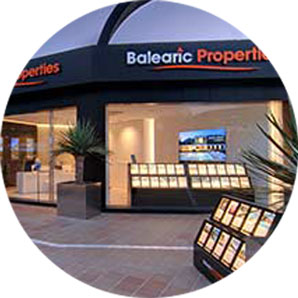
At Balearic Properties, Savills Associates, we have been helping international buyers find, evaluate and purchase property in Mallorca since 1999. Our approach goes beyond simply listing properties — we provide substantive guidance at every stage of the acquisition process.
We work with buyers to identify locations and property types that match their lifestyle objectives and long-term investment criteria. We coordinate with independent lawyers, tax advisors and notaries to ensure due diligence is thorough and the transaction is properly structured.
Mallorca’s prime property market has limited supply. A well-selected property in the right location — whether a contemporary villa overlooking the bay in Puerto Andratx, a traditional stone finca in the hills above Pollensa, or a frontline apartment in Palma — represents both an exceptional place to live and a resilient long-term asset.
If you are considering buying property in Mallorca in 2026, the right preparation and the right professional guidance will significantly improve both the quality of your decision and the security of your transaction.
For a wider view of the island, explore Balearic Living’s guides to Mallorca before choosing an area to buy.
If you are considering northern Mallorca, a stay in one of Pollensina’s villas in Pollença and Puerto Pollença can help you experience the area before deciding where to buy.
Contact our team today to begin your search.
Explore all properties for sale in Mallorca.
Frequently Asked Questions
- Can foreigners buy property in Mallorca?
Yes. There are no restrictions on foreign nationals purchasing property in Mallorca or anywhere else in Spain. EU and non-EU citizens alike can buy freely. The main requirement is obtaining a Spanish NIE number (Número de Identificación de Extranjero) before completing the purchase. Read our guide on how to get a Spanish NIE number.
- How much does it cost to buy a property in Mallorca beyond the asking price?
Allow for purchase taxes, notary and Land Registry fees, independent legal advice and any finance or renovation costs on top of the agreed price. Resale properties and new builds are taxed differently, and the applicable rate can depend on the price and the buyer’s circumstances. Ask an independent lawyer or tax adviser for a written estimate for the specific property before paying a deposit.
- What is the ITP tax rate in Mallorca?
The Balearic Islands levy property transfer tax (ITP) on resale purchases. The calculation depends on the purchase price and any reliefs for which the buyer qualifies. Ask your lawyer or tax adviser to confirm the current rate and estimate the tax for the property before you commit to a deposit.
- Do I need a lawyer to buy property in Mallorca?
It is not a legal requirement, but it is strongly recommended. An independent lawyer will carry out due diligence on the property — verifying ownership, checking for debts or charges, reviewing planning status and licences — and will represent your interests throughout the transaction. Read our guide on finding a good lawyer in Mallorca.
- Can I get a mortgage in Spain as a non-resident?
Some Spanish lenders consider applications from non-resident buyers, but eligibility, loan-to-value limits, term, rates and required documents vary by lender and applicant. Seek a written mortgage assessment early and make sure the financing timetable is reflected in any reservation or preliminary contract.
- What is an arras contract?
An arras agreement is a preliminary contract often used to set out the price, deposit, deadlines and consequences if either party withdraws. Those consequences depend on the contract’s wording and the type of deposit agreed. Have an independent lawyer review the terms and complete the relevant checks before signing or transferring funds.
- What is an ETV licence and why does it matter?
An ETV is a tourist rental licence associated with eligible holiday accommodation in the Balearic Islands. Rules and availability vary by property and area, and an existing licence should never be assumed transferable or sufficient for a planned use. Before buying for short-term rental income, ask a specialist to verify the property’s current legal status and the applicable local rules.
- How long does the buying process take in Mallorca?
From agreeing a price to completing at the notary, the process typically takes between 6 and 12 weeks for a straightforward resale purchase. This timeline can be shorter if the buyer is paying cash and all documentation is in order, or longer if a mortgage is involved or if due diligence uncovers issues that need to be resolved. Having your NIE number, bank account and legal representation in place before making an offer will help avoid unnecessary delays.
- Is Mallorca property a good investment in 2026?
A property in Mallorca may serve both lifestyle and investment goals, but returns depend on the location, purchase price, condition, ownership costs and any applicable rental rules. Compare recent comparable sales and realistic running costs, and have an independent professional check the legal and planning status. Past market performance does not guarantee future appreciation or rental income.
- What types of property can I buy in Mallorca?
Mallorca offers one of the most diverse luxury property markets in the Mediterranean. Buyers can choose from contemporary sea-view villas with infinity pools, traditional stone fincas set in the countryside, frontline apartments with direct beach access, townhouses in historic Palma, off-plan new build apartments, and golf properties in prestigious communities such as Son Vida. Browse our full range of properties for sale in Mallorca or explore by location using our Mallorca locations guide.